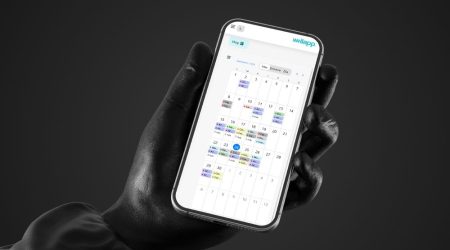
One of the biggest profitability issues in a hair salon isn’t necessarily cancellations or no-shows. In many cases, the real problem is the so-called dead holes: spaces of time in the agenda that are wasted and that reduce the productivity of the business.
When an agenda is not well organized, it is common to find periods of 15, 30 or even 60 minutes in which no professional is attending to clients, even if the day is apparently full.
The good news is that there are strategies to optimize the agenda and make better use of each hour of work.
What are dead holes in a hairdresser?
Dead spaces are periods of time that are left empty between appointments.
For example:
- A client finishes at 11:15.
- The next appointment starts at 11:45.
During those 30 minutes, the professional is not generating income.
If these small spaces are repeated several times a day, they can represent several hours lost per week.
Why do dead holes occur?
There are several common reasons:
Poor planning of services
Not all treatments require the same amount of time.
If the durations are not correctly configured, it is easy for the agenda to generate spaces that are difficult to take advantage of.
Last minute cancellations
When a customer cancels with a small margin, an unexpected gap appears that can be difficult to fill.
Poorly distributed reserves
Many agendas allow you to book without taking into account the optimization of schedules, generating empty spaces between services.
Not taking advantage of exposure times
This is one of the most common mistakes in hairdressers and beauty centers.
Exposure times: an opportunity to increase profitability
Many services include periods when the practitioner does not need to be actively working with the client.
For example:
- Color application.
- Discolorations.
- Hair treatments.
- Permanent.
- Some technical treatments.
During these minutes, the product acts while the professional is available to perform other tasks or attend to another customer.
However, many planners continue to block out that time as if the professional were busy.
The result is a loss of productive capacity.
How to manage exposure times correctly
The key is to differentiate between:
- Effective working time.
- Exposure or waiting time.
When both concepts are managed independently, the agenda can make much better use of the available resources.
For example:
A color service can last 90 minutes in total, but only require 30 minutes of active work spread out during the process.
The remaining 60 minutes can be used to attend other compatible services.
How Wilapp helps optimize your schedule
Wilapp allows you to configure services with exposure times in mind.
This means that the agenda distinguishes when the professional is actively working and when the client is in a waiting or exposure period.
Thanks to this functionality it is possible to:
- Reduce dead holes.
- Optimize the occupancy of the agenda.
- Serve more customers during the day.
- Make better use of the time available.
- Increase the profitability of the business.
Instead of blocking out the entire duration of the service, the schedule can more realistically reflect the professional’s availability.
Other strategies to reduce dead holes
Use automatic reminders
Absences generate empty spaces that are difficult to fill.
Reminders help reduce forgetfulness and improve attendance.
With Wilapp, customers receive:
- Confirmation when booking.
- Reminder one day before.
- Reminder one hour before.
- Notices of modifications or cancellations.
Analyze peak demand hours
Knowing the busiest times allows you to better organize availability.
Group similar services
Scheduling certain treatments in specific slots helps to optimize time and resources.
Makes it easy to relocate appointments
A flexible agenda allows you to cover gaps that appear due to changes or cancellations.
How much money can dead holes cost?
Although they may seem insignificant, dead spaces have a direct impact on turnover.
For example, if a hairdresser loses an average of 45 minutes a day due to empty spaces, this means:
- More than 3 hours per week.
- More than 12 hours per month.
- More than 140 hours a year.
Hours that could be spent serving customers and generating revenue.
Conclusion
Avoiding dead spots is one of the most effective ways to increase the profitability of a hairdresser without the need to extend hours or hire more staff.
The key is to optimize the agenda, reduce absences and make the most of exposure times.
Having a tool that takes these factors into account allows you to better organize your daily work and make the most of every available hour.