A missed appointment isn’t just an hour-long slot in your schedule. It is time that you had reserved, resources that you had prepared and income that finally does not arrive.
If you have a hairdresser, a beauty salon, a barbershop, a clinic, a physiotherapy center or any business that operates by appointment, you have probably suffered the dreaded no-show: a client had a reservation, but does not show up or give enough notice.
When it happens once, it may seem unimportant. When it happens several times each week, the economic impact can be considerable.
But do you know how much money your business really loses from forgotten appointments?
Let’s calculate it.
Missed Appointments Loss Calculator
You can make a very simple estimate using three pieces of information:
Number of appointments customers miss per month × average ticket per appointment = lost potential revenue per month
For example, imagine a beauty center where:
- There are 8 absences per month.
- The average ticket for each appointment is €50.
The calculation would be:
8 × €50 = €400 per month
If this situation continues throughout the year:
€400 × 12 months = €4,800 per year
That is, just eight missed appointments per month could represent €4,800 of potential unrealized income per year.
Make your own calculation
To know approximately how much absences can represent in your business, fill in these three pieces of information:
1. How many clients miss their appointment each month?
________ Quotes
2. What is the average ticket for a date?
________ €
3. Multiply both values.
Missed appointments × average ticket = monthly potential loss
Then:
Monthly loss × 12 = annual potential loss
The result may surprise you.
Examples: How much can forgotten appointments cost
Let’s look at several scenarios to better understand their impact.
| Missed appointments per month | Average ticket | Monthly Potential Loss | Annual potential loss |
| 4 | 30 € | 120 € | 1.440 € |
| 8 | 40 € | 320 € | 3.840 € |
| 10 | 50 € | 500 € | 6.000 € |
| 15 | 60 € | 900 € | 10.800 € |
| 20 | 75 € | 1.500 € | 18.000 € |
It does not necessarily mean that all that amount could have been recovered, as it will depend on whether the gap can be filled with another customer and the costs associated with the service. But it does allow you to visualize the economic value of the appointments that were scheduled and finally do not take place.
The cost of a missed appointment goes beyond the service
The problem is not only to stop invoicing the expected amount.
An absence can generate other indirect costs.
Wasted professional time
You have reserved a period of the agenda that you can no longer use.
If the customer does not give advance notice, it can be practically impossible to cover it.
Prepared resources
Depending on the business, a booth, material, products or equipment may have been prepared specifically for that appointment.
Gaps that are difficult to fill
A cancellation several days in advance can still be rearranged.
A no-show leaves an immediate gap.
Lower productivity
Although the day seems full on paper, absences reduce the truly productive hours.
Why do customers forget their appointments?
There is not always bad intention.
In many cases, the customer has simply forgotten.
Some common causes are:
- He booked several weeks ago.
- It confused the day.
- He scored the hour wrong.
- He has too many commitments.
- He did not receive any reminders.
- An unforeseen event arose and he forgot to warn.
Therefore, an important part of the problem can be prevented through good communication.
How much does a single missed appointment mean each day?
This is where the figures begin to be especially relevant.
Imagine that your business is open 22 days a month and you miss only one appointment a day.
With an average ticket of €40:
22 appointments × €40 = €880 per month
In one year:
€880 × 12 = €10,560
A single daily absence could represent more than €10,000 in planned services that are not finally carried out during the year.
That’s why cutting back on even a small portion of no-shows can have a major impact on profitability.
How to Reduce Missed Missed Appointments
There is no formula that guarantees that all customers will always come, but we can reduce the risk.
1. Confirm the appointment when booking
The customer should receive clear information about the date and time right out of the box.
A commit helps detect errors before they become an absence.
2. Send a reminder the day before
When a booking was made weeks ago, it is easy to have been forgotten.
A 24-hour notice brings the appointment back to the customer’s mind, and if they are ultimately unable to make it, it increases the chances that they will communicate it in time.
3. Send another notice near the appointment
A final reminder can be especially helpful for clients with busy schedules.
4. Immediately communicate any modifications
If the schedule changes, the customer should receive the updated information to prevent them from coming at the wrong time.
5. Automate reminders
Sending all these messages manually is a considerable workload.
The higher the number of appointments, the more difficult it is to maintain the process.
That’s why automation is especially useful in businesses with a steady stream of customers.
How Wilapp helps reduce missed appointments
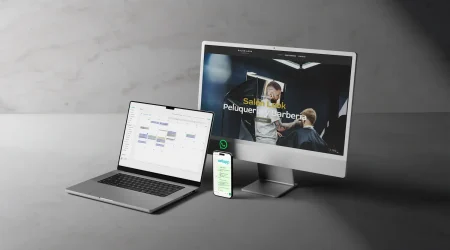
Wilapp automates reservation-related communications to keep the customer informed throughout the process.
The system includes:
- Confirmation at the time of booking.
- Reminder one day before.
- Reminder one hour before.
- Notice when an appointment is modified.
- Notice when an appointment is cancelled.
This way, the team doesn’t need to continually go through the agenda to decide who to send a message to.
Communication is automatically part of the appointment management process.
From 10 absences to 5: how much could you recover?
Let’s go back to an example.
Let’s say you have:
- 10 missed appointments a month.
- Average ticket of €50.
That represents:
10 × €50 = €500 per month in planned services not performed.
Now imagine that, thanks to better management and reminders, you manage to avoid five of those absences.
5 × 50 € = 250 €
That’s €250 a month of services that would no longer be lost because of those five avoided no-shows.
In twelve months:
€250 × 12 = €3,000
You don’t need to eliminate 100% of no-shows to feel the impact. Reducing a part can already make a considerable difference.
Calculate how much each empty hour costs you
You can also analyze the problem from another point of view.
If you know approximately how much your business bills for each productive hour, you can calculate the cost of empty slots.
For example:
Average hourly turnover × hours lost to no-shows per month = potential revenue associated with those gaps
If you generate an average of €45 per hour and accumulate 12 empty hours per month:
€45 × 12 = €540 per month
Analysing it in this way allows us to understand that the real asset of an appointment business is not only its client portfolio.
So is every available hour in your schedule.
Which businesses should especially control no-shows?
The impact is especially relevant in businesses where the professional’s time is reserved individually:
- Hairdressers.
- Barbershops.
- Beauty centers.
- Clinics.
- Medical consultations.
- Physiotherapy.
- Tattoo studios.
- Wellness centers.
- Self-employed professionals by appointment.
The higher the average price of the service and the length of the appointment, the greater the economic impact of an unexpected absence can be.
Don’t confuse cancellation with no-show
A cancellation does not always have the same impact as an unannounced absence.
If a customer cancels well in advance, there is the possibility of:
- Reorganize the agenda.
- Advance another customer.
- Offer the available space.
- Perform other productive tasks.
The real problem appears when the business discovers that the customer is not going to come when the time of the appointment has already arrived.
That’s why reminders don’t just want the customer to remember to come in. They can also encourage you to communicate any changes earlier.
Controlling absences is also controlling profitability
Many businesses analyze how much they invoice each month, but they do not calculate how much they could be losing income due to unexpected gaps.
Recording absences and observing their progress can help you answer important questions:
- How many no-shows do I have per month?
- On which days do they occur most frequently?
- What is the average ticket for these appointments?
- How many hours of agenda do they represent?
- Is the problem increasing or decreasing?
What seems like a small organizational problem can end up being a matter of profitability.
Frequently asked questions about missed appointments
What is a no-show?
In businesses by appointment, this term is used to describe a reservation where the customer or patient does not show up and the service is ultimately not performed.
How do I calculate how much I lose from missed appointments?
As a basic estimate, multiply the number of missed appointments per month by the average ticket associated with those appointments.
Can reminders prevent all no-shows?
No. There will always be unforeseen events and unavoidable situations. The aim is to reduce especially those absences caused by forgetfulness or confusion.
When should I remember an appointment?
A strategy can combine confirmation when booking with subsequent notifications. Wilapp sends the confirmation when booking, a reminder one day before and another one hour before.
Can I automate these messages?
Yes. Wilapp automates the communications associated with the reservation, including confirmations, reminders and notices of modifications or cancellations.
Conclusion: Put a Number on Your Missed Dates
A missed appointment may seem like a small problem until you multiply its value by all the absences of the month and then by the twelve months of the year.
Do the math today:
Number of monthly no-shows × average ticket × 12
The result will give you an estimate of the annual value of the scheduled services that are not carried out due to these absences.
And most importantly: you don’t need to eliminate all no-shows to make a positive economic impact.
Reducing them through confirmations, reminders, and better schedule management can help you make better use of your available hours.
With Wilapp, you can automate these communications so that your customers remember their appointments while you focus on managing and growing your business.